Speed Read:
- The FCA’s traffic light rating system changes the game for employer choice, but risks rewarding scale over quality. Standardised value for money (“VFM”) ratings give employers a meaningful basis for comparison for the first time, but the metric favours large, low-cost arrangements. Smaller, well-governed schemes with superior member support or sustainable investment options have limited means to demonstrate that value.
- The Mansion House Accord and the VFM Framework may pull in opposite directions. Schemes allocating to private markets may be penalised on both cost and performance metrics simultaneously, since private market returns lag and management fees are higher, even where the long-term risk-adjusted case is strong.
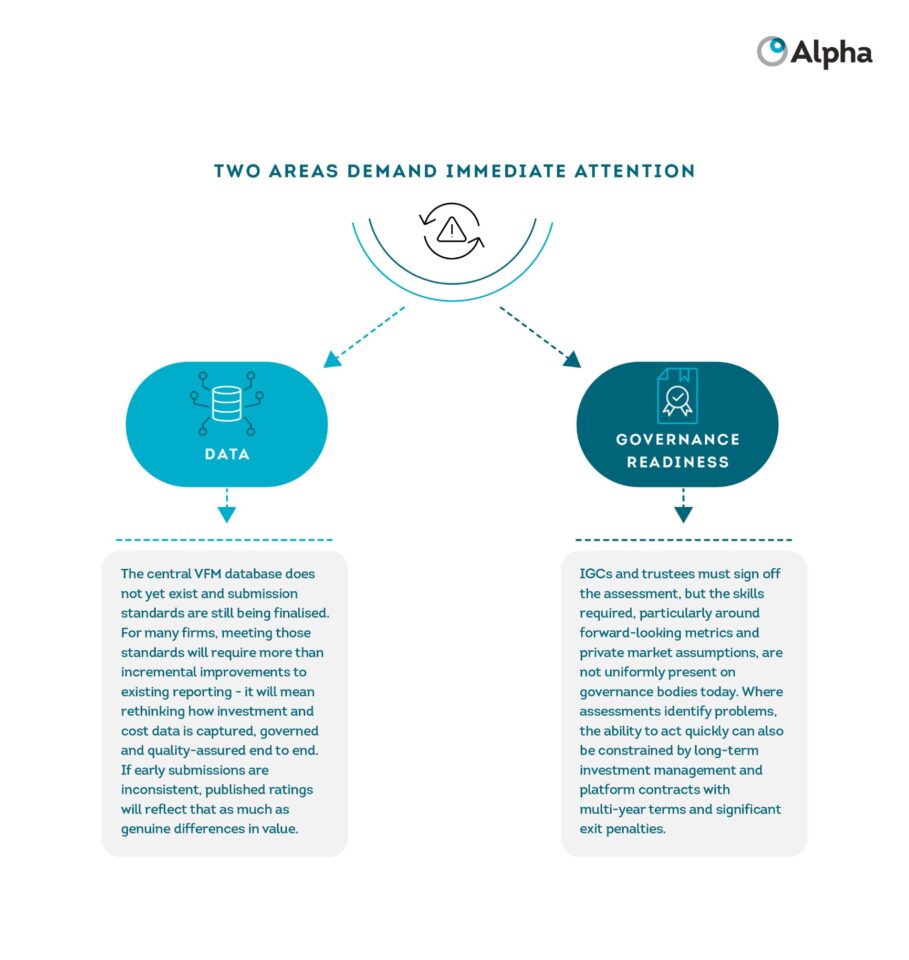
- 2028 is closer than most firms’ readiness suggests. Firms that underestimate the data infrastructure challenge will face boards signing off assessments built on foundations they cannot interrogate. Automated, auditable data pipelines need to be built now, not under deadline pressure.
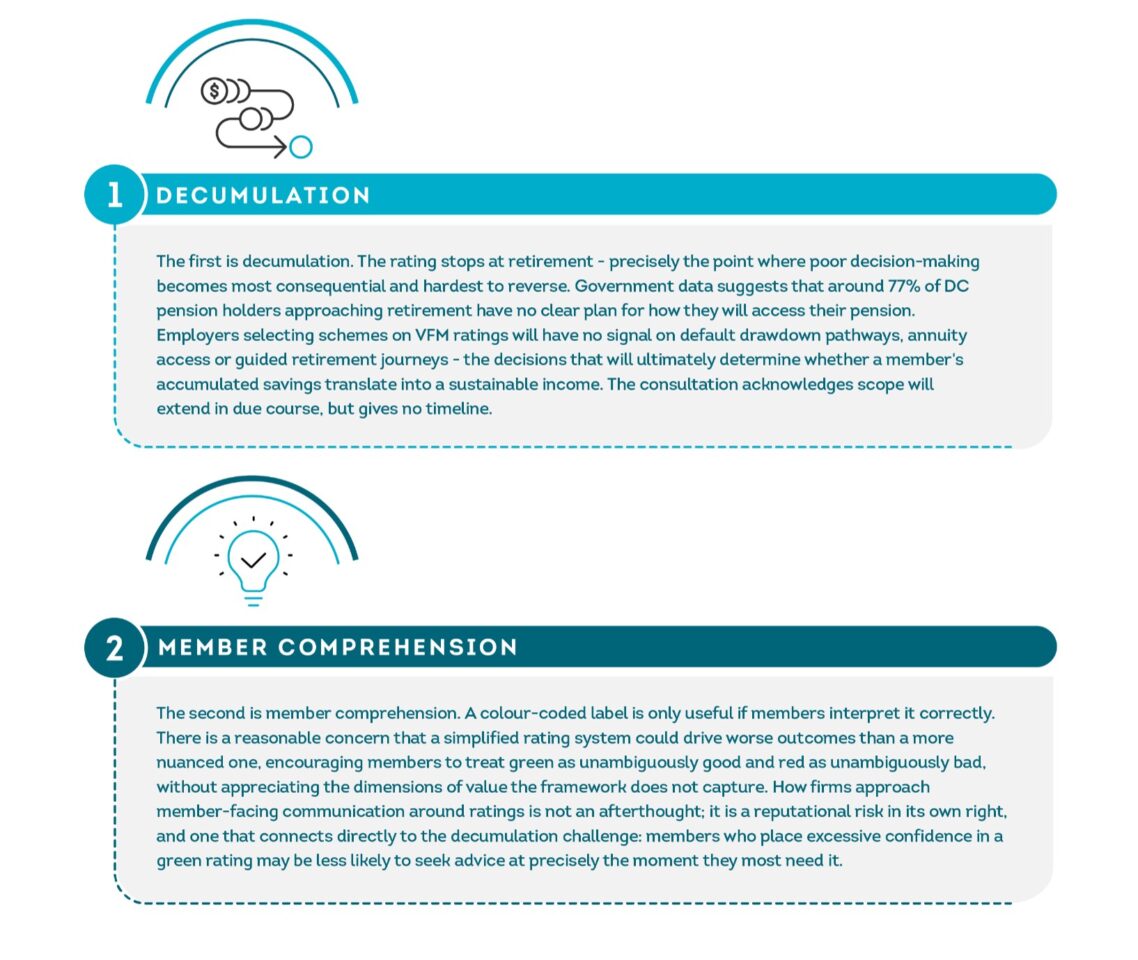
- The framework has two structural blind spots: decumulation and member comprehension. Ratings stop at retirement, giving employers no signal on drawdown pathways or guided retirement journeys. Meanwhile, a simplified colour-coded label risks driving worse behaviour if members treat green as unambiguously good without understanding what the rating does not capture.
Introduction: The Value for Money Framework
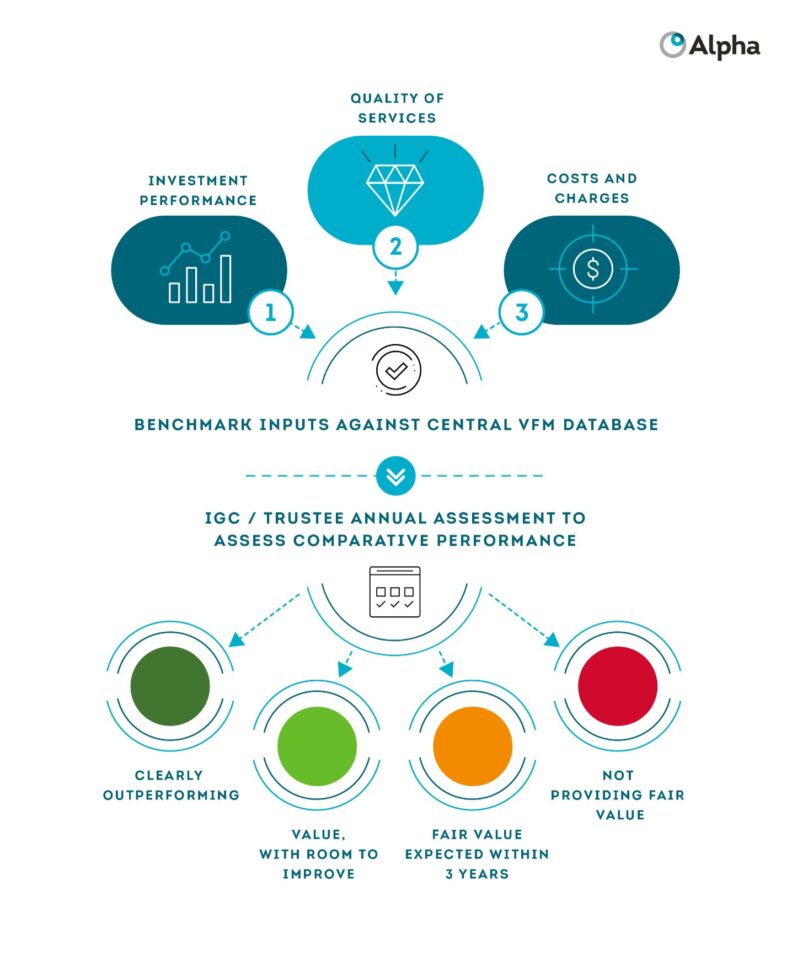
The FCA’s Value for Money Framework will require providers of workplace defined contributions (“DC”) default arrangements to measure and publicly disclose investment performance, costs and charges, and service quality against a standardised metric set, submitted to a central database for market-wide comparison.
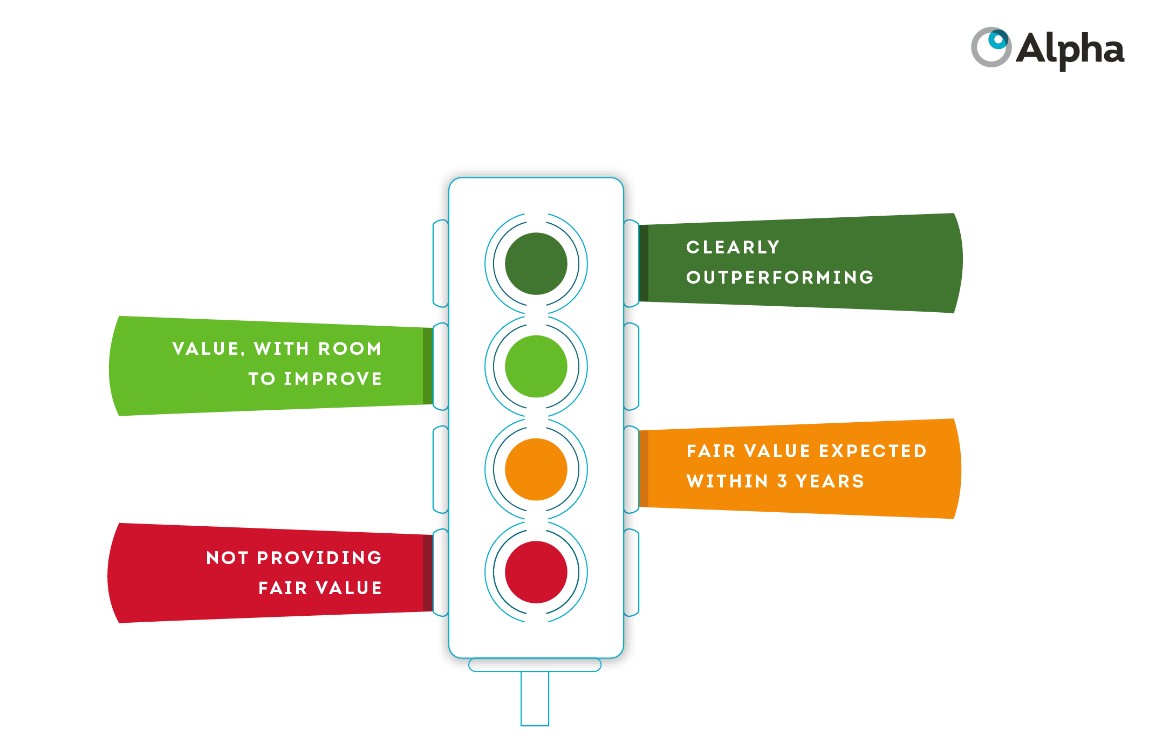
Independent Governance Committees (“IGCs”) and trustees must use that data to assign one of four public ratings.